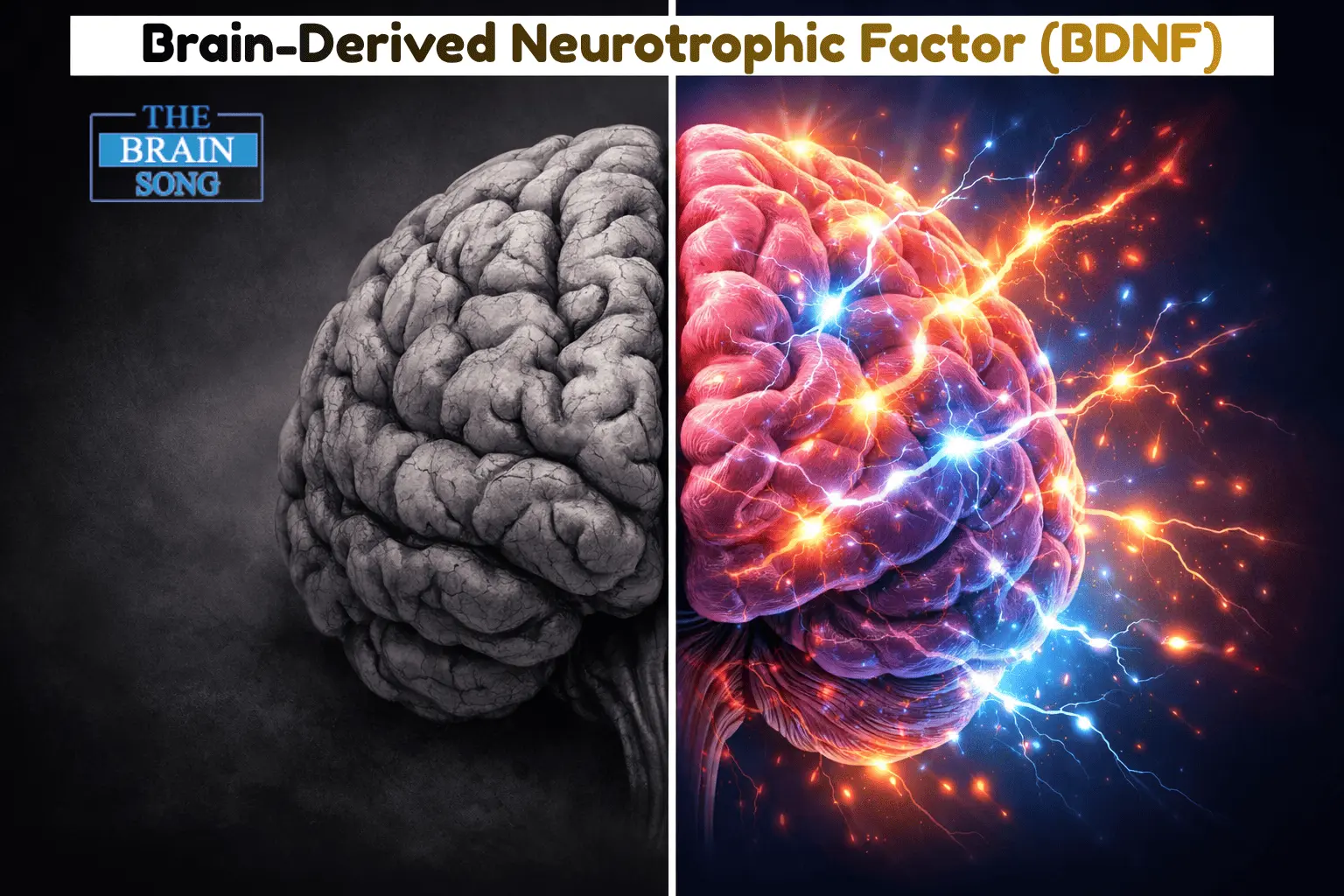
What Is BDNF? (Quick Answer)
BDNF (Brain-Derived Neurotrophic Factor) is a protein produced naturally in the brain that supports the growth, survival, and function of neurons. Neuroscientists call it the brain's "fertilizer" because it nourishes neural connections and promotes neuroplasticity — the brain's ability to learn and form new memories. Low BDNF is linked to brain fog, poor memory, stress sensitivity, and low mood. Higher BDNF levels are associated with sharper focus, faster learning, and greater cognitive resilience.
What Does BDNF Do? (Quick Answer)
BDNF supports memory formation, learning speed, mood regulation, and cognitive resilience. It activates receptors that strengthen neural connections (a process called long-term potentiation), protects neurons from stress and inflammation damage, and stimulates the growth of new neural connections — particularly in the hippocampus, the brain region central to memory and learning.
BDNF Meaning — Full Term Explained
BDNF stands for Brain-Derived Neurotrophic Factor. "Brain-derived" means it is produced primarily in the brain itself. "Neurotrophic" comes from the Greek: "neuro" (nerve) and "trophic" (nourishment or growth). "Factor" indicates it is a signaling molecule that influences cell behavior. Together, brain derived neurotrophic factor means: a brain-produced molecule that nourishes and supports nerve cell growth and function.
Table of Contents
BDNF stands for Brain-Derived Neurotrophic Factor. It is a protein produced naturally in the brain that supports the growth, survival, and function of neurons. Neuroscientists commonly call BDNF the "brain's fertilizer" because it nourishes neural connections and promotes neuroplasticity — the brain's ability to learn, adapt, and form new memories. Higher BDNF levels are linked to sharper focus, faster learning, better memory, and greater mental resilience.
There is a molecule in your brain that neuroscientists describe, almost universally, as one of the most important discoveries in modern brain science. It doesn't get the headlines that dopamine or serotonin do — but increasingly, researchers believe it may matter more for long-term cognitive health than either of those better-known chemicals.
Its name is BDNF: Brain-Derived Neurotrophic Factor. If you care about staying sharp as you age, learning efficiently, or keeping your brain working at its best — understanding BDNF is worth your time.
BDNF is a protein produced naturally in the brain that supports the survival, growth, and functioning of neurons. Neuroscientists call it "fertilizer for the brain" because it nourishes neural connections. Higher BDNF levels are consistently linked with sharper memory, faster learning, and greater mental resilience.
What Is BDNF Exactly?
BDNF was first identified in 1982 by neuroscientist Yves-Alain Barde and colleagues. It belongs to a family of proteins called neurotrophins — molecules that promote the growth and survival of neurons. Since its discovery, BDNF has become one of the most studied proteins in neuroscience, with thousands of published papers examining its role in cognitive function, mood, learning, and brain aging.
The most important thing to understand about BDNF is where it acts. It is most highly concentrated in the hippocampus — the brain region most critical for forming and storing memories. It also appears in the prefrontal cortex (decision-making and focus) and the basal ganglia (motivation and movement). These are precisely the areas most associated with cognitive performance.
What BDNF Actually Does Inside Your Brain
To understand BDNF, it helps to think about what neurons need to do their job. A neuron isn't just a passive wire — it actively responds to signals, forms new connections, strengthens existing ones, and prunes connections that aren't being used. All of that activity requires biological support. BDNF is one of the central proteins that provides it.
BDNF supports six key brain functions:
- Neuroplasticity — the brain's ability to rewire itself in response to experience, learning, and recovery from injury
- Long-term potentiation (LTP) — the cellular process that underlies memory formation; BDNF is directly involved in strengthening synaptic connections
- Neuroprotection — protecting neurons from stress, inflammation, and oxidative damage
- Synaptogenesis — encouraging the growth of new synaptic connections between neurons
- Mood and stress regulation — BDNF receptors are abundant in areas tied to emotional processing; low BDNF is linked to depression
- Cognitive reserve — contributing to the brain's resilience against age-related decline
The main reason BDNF matters so much is that it is not fixed — it responds to what you do, how you sleep, how you manage stress, and how you stimulate your brain. That means you have real influence over your BDNF levels.
Why BDNF Declines — And Why That Matters
BDNF levels tend to decrease naturally with age — estimates suggest a decline of around 30% from young adulthood to later life. But several lifestyle factors accelerate that decline significantly.
Factors that reduce BDNF:
- Chronic stress and elevated cortisol
- Poor sleep quality or sleep deprivation
- Sedentary lifestyle with minimal physical activity
- High-sugar, ultra-processed diets
- Social isolation and lack of cognitive stimulation
- Chronic inflammation
- Excessive alcohol consumption
- Smoking
This matters because BDNF decline is not just about feeling mentally sluggish. Research has consistently linked lower BDNF levels with impaired memory function, reduced cognitive flexibility, greater vulnerability to neurological decline, and decreased ability to learn new skills at any age.
Signs Your BDNF May Be Low
BDNF cannot be directly measured through standard blood tests in most clinical settings, but certain patterns are associated with reduced BDNF activity:
- Persistent brain fog that doesn't improve with rest
- Difficulty forming new memories or retaining recently learned information
- Reduced motivation or mental drive without clear cause
- Feeling mentally slower than you used to at the same tasks
- Poor recovery from mental stress or cognitive fatigue
- Low mood that coincides with cognitive sluggishness
None of these symptoms alone confirm low BDNF — they can have many causes. But they are patterns worth taking seriously, particularly if multiple apply at once.